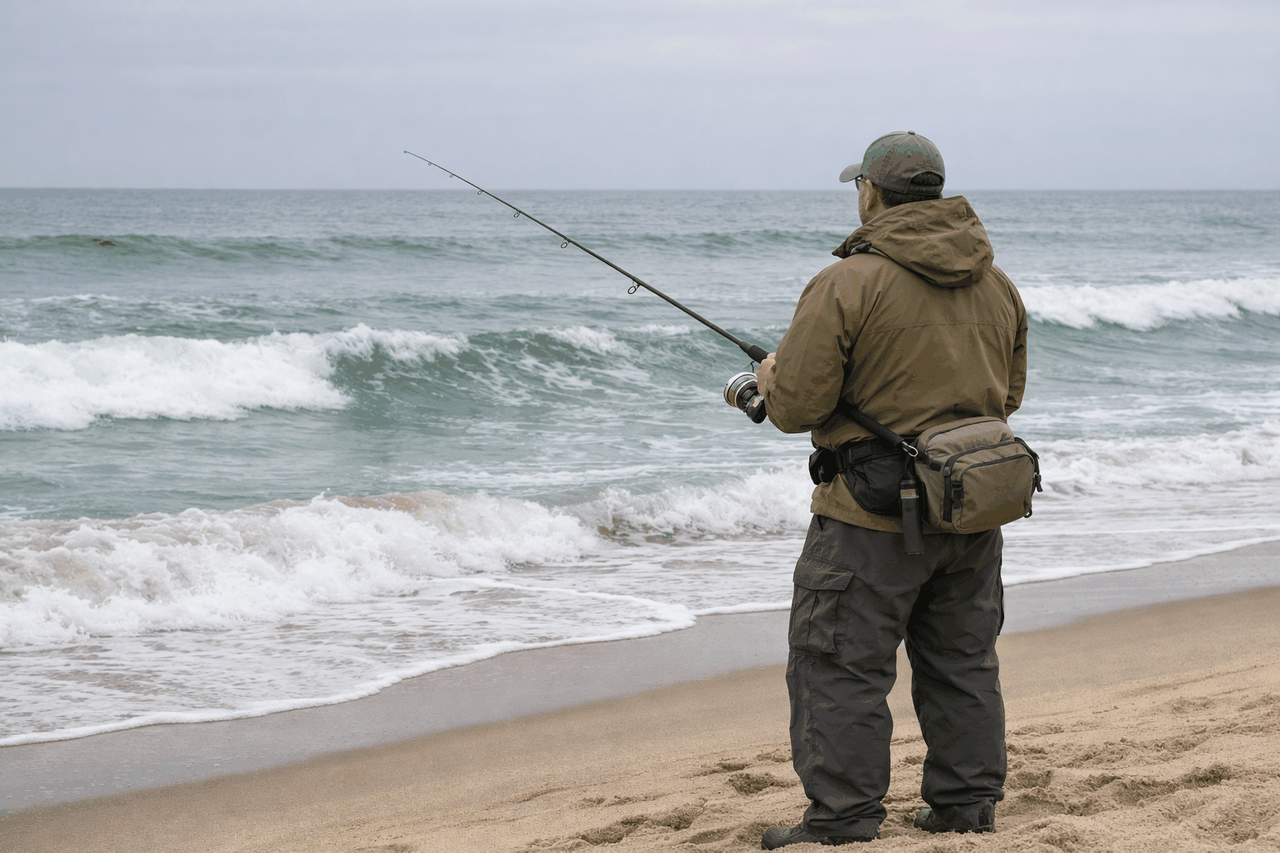
Start with a fish finder rig for a single bottom bait on clean ground when the line needs to move through a sinker slide. Choose a dropper or high-low rig to hold bait above a fixed sinker during relatively vertical fishing. In snag-prone shallows, consider a float or an unweighted drift when you have a clear route for the bait and a safe way to land a fish.
Choose for the bottom, current, and feeding layer
Look beyond the casting spot. Identify where the bait will travel, where the sinker will settle, and where you can steer a hooked fish. A rig that suits an open sandy beach may become difficult to control beside pier pilings.
| Rig | Bottom | Current | Cast or vertical | Target’s feeding layer | Check before casting |
|---|---|---|---|---|---|
| Fish finder | Clean sand or other relatively snag-free ground | A sinker can keep the bait in the intended area | Cast or lower a single bait | Near bottom, with line movement through the slide | The slide moves freely and the leader clears the sinker |
| Dropper or high-low | A place where a fixed terminal sinker can be retrieved | Allows a reasonably vertical line | Prefer a controlled, near-vertical drop | Bait raised above the sinker | Branches hang clear and hook count is permitted |
| Float | Shallows with snags beneath the intended bait path | Drift stays within a clear corridor | Cast or lower into that corridor | Above the snag zone | Bait depth, drift route, and landing access remain clear |
| Unweighted bait | A clear route for a naturally drifting bait | Lets you retain control of the drift | Cast or lower within manageable reach | The layer reached by the drifting bait | The bait can travel and return without entering snags |
Trolling is a separate moving-boat presentation and needs its own setup decisions. The broader choice among bottom fishing, floats, drifting bait, and moving presentations starts with how the bait reaches the fish. Florida Fish and Wildlife Conservation Commission fishing techniques.
Follow the line through each assembly
For a fish finder, thread the mainline through the sinker slide, add a protective bead if needed, and tie on the swivel. Attach the leader and hook to the other end of the swivel. Clip the sinker to the slide. For a dropper, the hook sits on a branch above a sinker fixed at the end of the rig body. A high-low adds another branch only where the rules permit it.
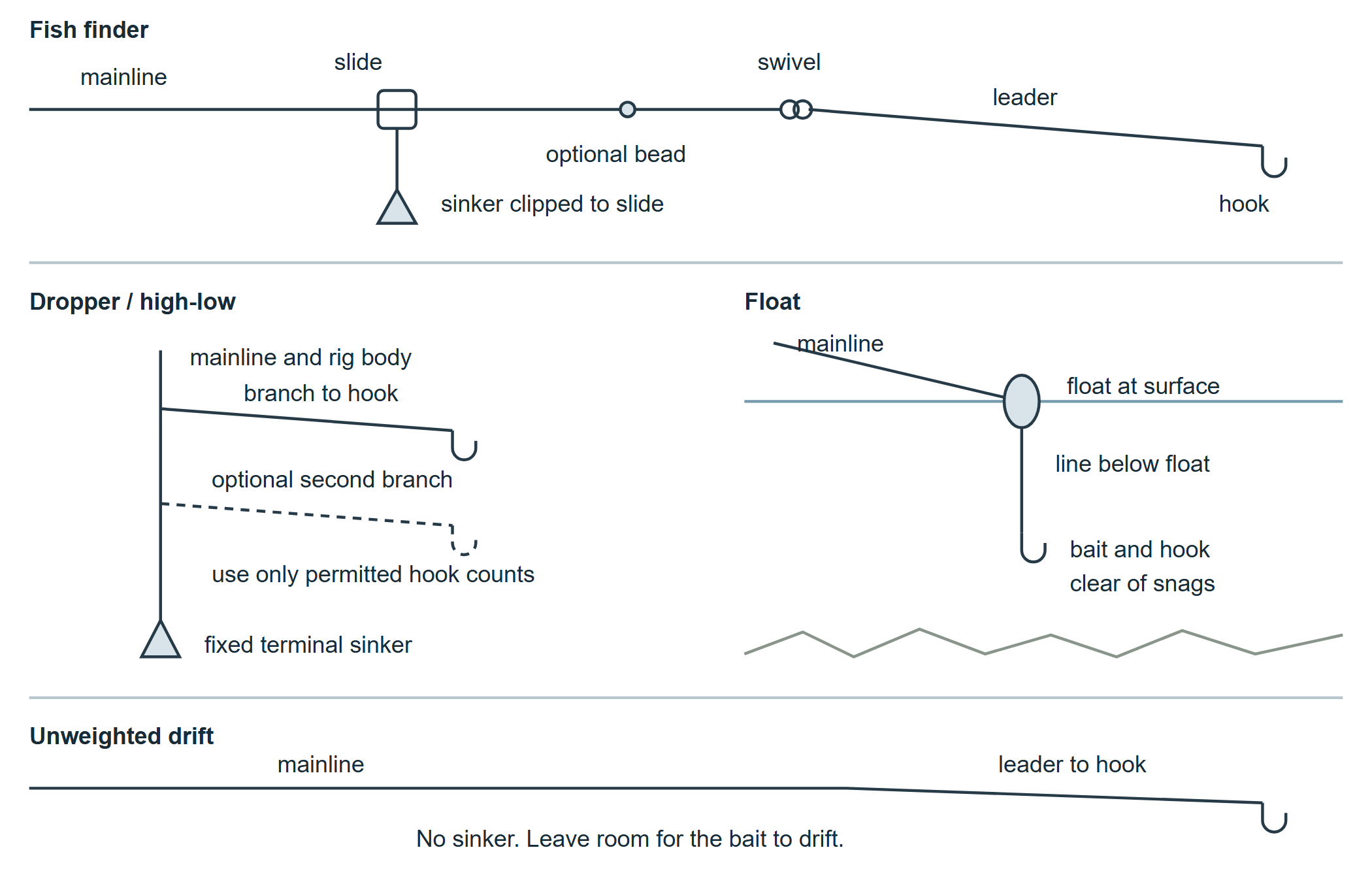
Set a float’s bait depth for the ground beneath its entire drift route. With an unweighted bait, allow for movement before choosing where to cast. These assemblies build on the sliding and fixed-sinker patterns in the New Jersey agency rig guide.
Check control, rules, and the next job
Before casting, inspect the knots, leader, slide, and hook positions. Include bait and all rig components when judging casting weight. If a bottom rig keeps moving out of position, retrieve it and reconsider the sinker load or line angle. If it repeatedly catches the same obstruction, change the route or presentation before casting there again.
Confirm hook count, hook type, bait restrictions, and harvest rules for your species and waters. Florida’s recreational pages are a location-specific rule source, not a blanket set of US requirements. Florida saltwater recreational fishing rules.
Surf fishing setup is the next job for beach stance, casting clearance, and surf conditions. A shore or pier plan also needs access and landing decisions. King mackerel needs a separate species-specific approach, while Fishing knots for beginners is a useful next topic when the rig’s connections are unfamiliar.