⏱ Estimated reading time: 3 min read
For a designated open sandy beach with modest breakers and a reachable trough, start with a single-hook fish finder rig and a rod, reel, and line suited to its full loaded weight. Assemble the rig on dry sand, make a short first cast, and check control before trying more distance.
Choose a beach position you can fish from dry sand
This setup assumes an accessible dry-sand stance and a trough you can reach without entering the surf. Confirm that the beach is open to fishing and that the land manager permits your intended access, hook, and bait. A rigging reference does not establish the status of a particular beach.
- Read the rod’s marked casting range. Judge the sinker, bait, and complete rig together.
- Use a reel and line suited to that load, with a single-hook leader, sinker slide, swivel, and a protective bead if needed.
- Carry line clippers and pliers. Secure the hook and weight while walking.
- Choose a position with a clear backswing and landing area. Keep people out of both before every cast.
The sliding assembly follows the shore-fishing pattern in the New Jersey agency rig guide. Use that example for technique, then confirm the rules and access conditions for the beach you will actually fish.
Assemble one complete single-hook rig
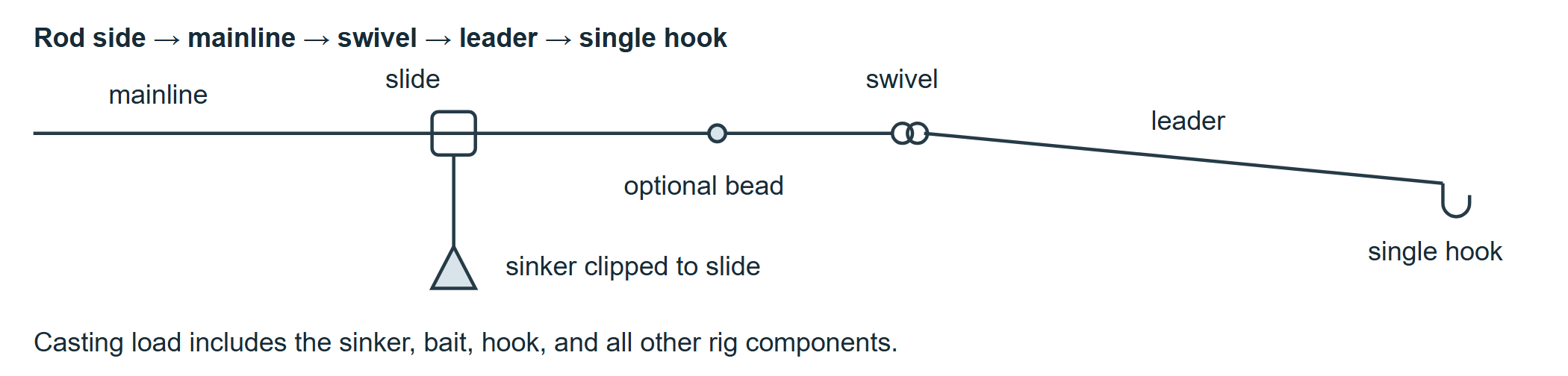
- Thread the mainline through the sinker slide. Add a protective bead between the slide and swivel if needed.
- Tie the mainline to the swivel. Attach the leader to the other end and tie on the single hook.
- Clip the sinker to the slide. Inspect the connections and make sure the leader and hook hang clear of the weight.
- Add the bait, then reassess the total casting load against the rod’s marked range. Include the bait’s mass rather than judging the sinker alone.
- From dry sand, clear the backswing and landing area and make a short cast toward the reachable trough. Check where the rig settles before extending the cast.
The first cast gives you a manageable way to judge placement and movement. More distance is useful only when the rig still reaches an area you can fish and retrieve from your chosen stance.
Adjust one variable and keep the stance safe
If the rig creeps away from the intended area, retrieve it. Change either the sinker weight or the casting angle, then repeat the short cast. Changing one variable at a time makes the result easier to interpret. Keep every loaded cast within the rod’s marked range.
Stay on dry sand. Stop for closures, crowding, lightning, or dangerous surf. If water conditions remove your dry stance or safe casting room, end the attempt from that position. Modest breakers alone do not establish that a surf zone is safe. National Weather Service rip current safety.
On clean sand where a bottom bait still suits the conditions, compare the fish finder with other bottom rigs. If the bait keeps running into obstructions, change the casting lane or choose a presentation that stays above them. Reassess the route before adding weight or casting farther.
