⏱ Estimated reading time: 4 min read
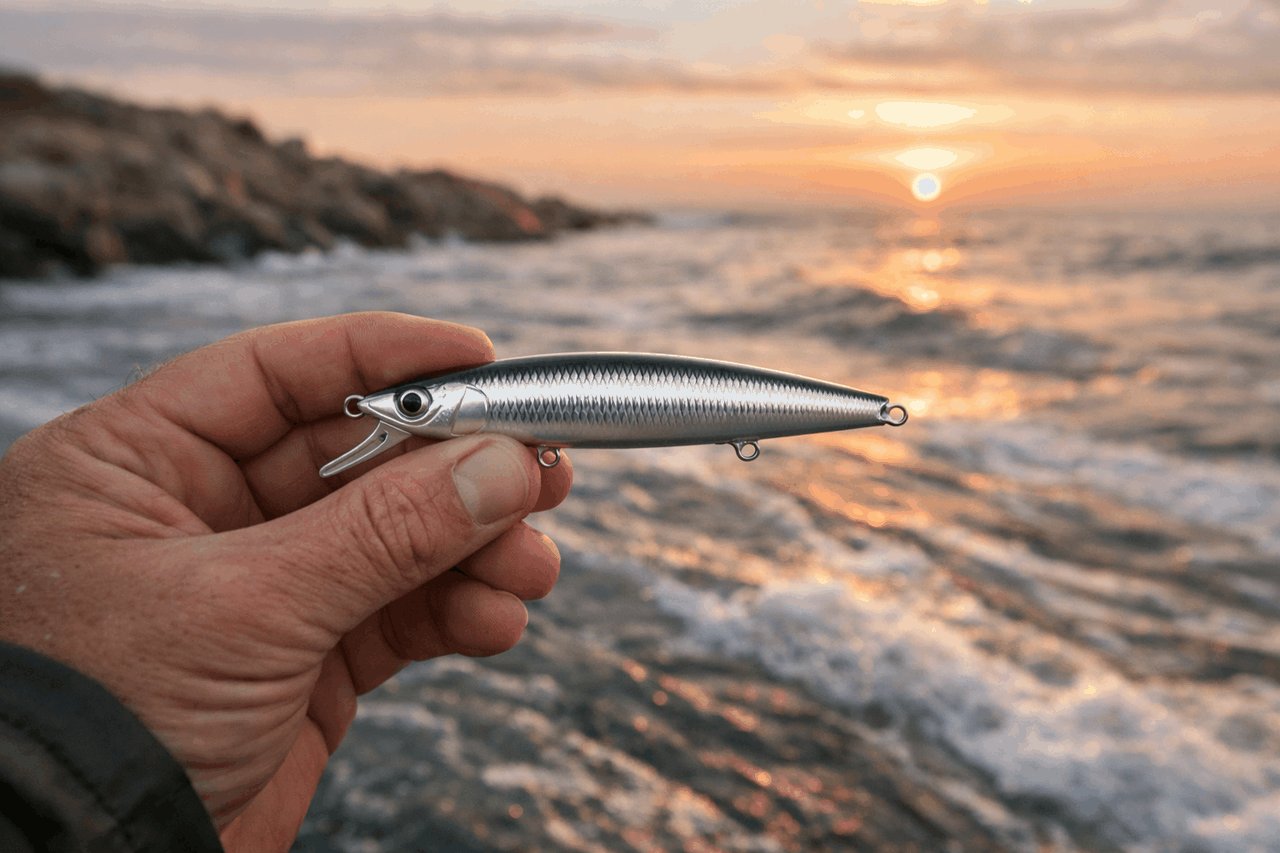
Choose a shore lure by the depth and track you need. Start with a swimming plug for a higher presentation when prey and current suit it. Use a single soft-plastic jig to work a controlled deeper track. Choose a metal lure for distant water only when you can also retrieve it through the intended layer. Casting farther helps only if the lure reaches useful water and stays under control.
Read the water from a usable position
The target is striped bass, Morone saxatilis, whether you are standing beside coastal water or a freshwater reservoir. On a surf or bay current seam, choose a casting angle that lets you follow the lure as it crosses the moving water. In mild current, concentrate on the depth you can maintain through the retrieve. Massachusetts guidance includes plugs and jigs among the options for shore anglers. Massachusetts striped bass guidance
At an accessible reservoir bank, work water you can cover deliberately before making distance the priority. Lake Texoma provides a freshwater agency case for planning access and checking local requirements. Use the agency’s access information to choose a lawful bank position and check the license and permit requirements that apply there. TPWD Lake Texoma information
In the surf, keep casting and landing within a position where you can remain safely. In a tailwater, avoid restricted entry and water subject to rapidly changing flow. A promising casting angle does not justify moving beyond safe access.
Match the lure to the track
| Lure | Choose it when | First presentation | Reason to change |
|---|---|---|---|
| Swimming plug | You want a higher track, and the prey and current suit a swimming presentation. | Retrieve across or along the chosen lane while watching whether the plug maintains its action. | The plug loses its swimming action or stays above the layer you intend to cover. |
| Single soft-plastic jig | You need a deeper track that you can adjust through sink time, retrieve and jig weight. | Begin with a short sink interval, then retrieve steadily enough to follow the jig’s progress. | Repeated bottom hang-ups show that the present track crosses obstructions, or the jig never reaches the intended layer. |
| Metal lure | The chosen water lies beyond your useful range with another presentation. | Cast to that lane and begin a retrieve that keeps the lure in the intended layer. | The extra reach puts the lure beyond your control, or it sinks below or rises above the useful track. |
Use the same casting lane for a few deliberate adjustments. Change one thing at a time, such as the sink interval or retrieve pace, so you can connect the change with the lure’s behavior. The jig and metal options here describe ways to control presentation, not a ranking of catch rates.
Separate a bottom problem from a depth problem
A lure that stops solidly at the same point on repeated casts is encountering something along that route. Treat it as a likely obstruction. On the next cast, shorten the sink interval, begin retrieving sooner or shift the lane from your safe position. Repeating the same deep track only repeats the problem.
A lure that returns freely may still be swimming above the layer you want. If you have a reason to target deeper water, allow a little more sink time or switch to the jig for a more controlled descent. No bites alone do not establish that fish are below the lure. Keep the distinction between an observed obstruction and an unconfirmed depth choice.
Before fishing Massachusetts coastal water, read the state’s rules reminder and follow its regulation links for the requirements in force on your fishing date. For Lake Texoma, check the freshwater requirements for the location you will fish. Massachusetts coastal rules do not determine reservoir limits or permits. Massachusetts striped bass rules reminder and TPWD Lake Texoma information
