⏱ Estimated reading time: 3 min read
Use a fish finder rig for a single bait on clean bottom when you want line to travel through a sinker slide. Use a dropper rig when you can fish relatively vertically and want the bait on a branch above a fixed terminal sinker. Choose between them by depth, current, snag risk, and the layer where your target feeds.
Match the rig to the bottom you can control
Consider a sandy channel edge with current. A sliding rig gives one bait room to move while the sinker rests on clean ground. Beside a permitted pier, a single-branch dropper can keep the bait above its weight during a controlled lowering. That choice depends on having room to keep the rig and a hooked fish clear of the pilings.
| Situation | Starting choice | Bait position | Control check |
|---|---|---|---|
| Clean sandy channel edge with current | Single-hook fish finder | Near bottom beyond the sliding weight | The sinker maintains the intended position and the leader avoids snags |
| A relatively vertical drop beside pier structure | Single-branch dropper, where permitted | Above the fixed terminal sinker | The line, hardware, and landing route remain clear of pilings |
| Depth or current carries either rig into obstructions | Reconsider the position or presentation | Keep bait out of the snag path | There is a clear route down and back before another drop |
Judge the whole path through the water. Knowing the depth is useful only if you can also control where the rig travels and retrieve it from that position. FWC bottom-fishing techniques.
Build the sliding or fixed-sinker pattern
For the fish finder, pass the mainline through the slide, add a protective bead if needed, and tie the mainline to a swivel. Attach the leader and single hook beyond the swivel, then clip the sinker to the slide. For the dropper, attach a hook branch above a sinker fixed at the bottom of the rig body.
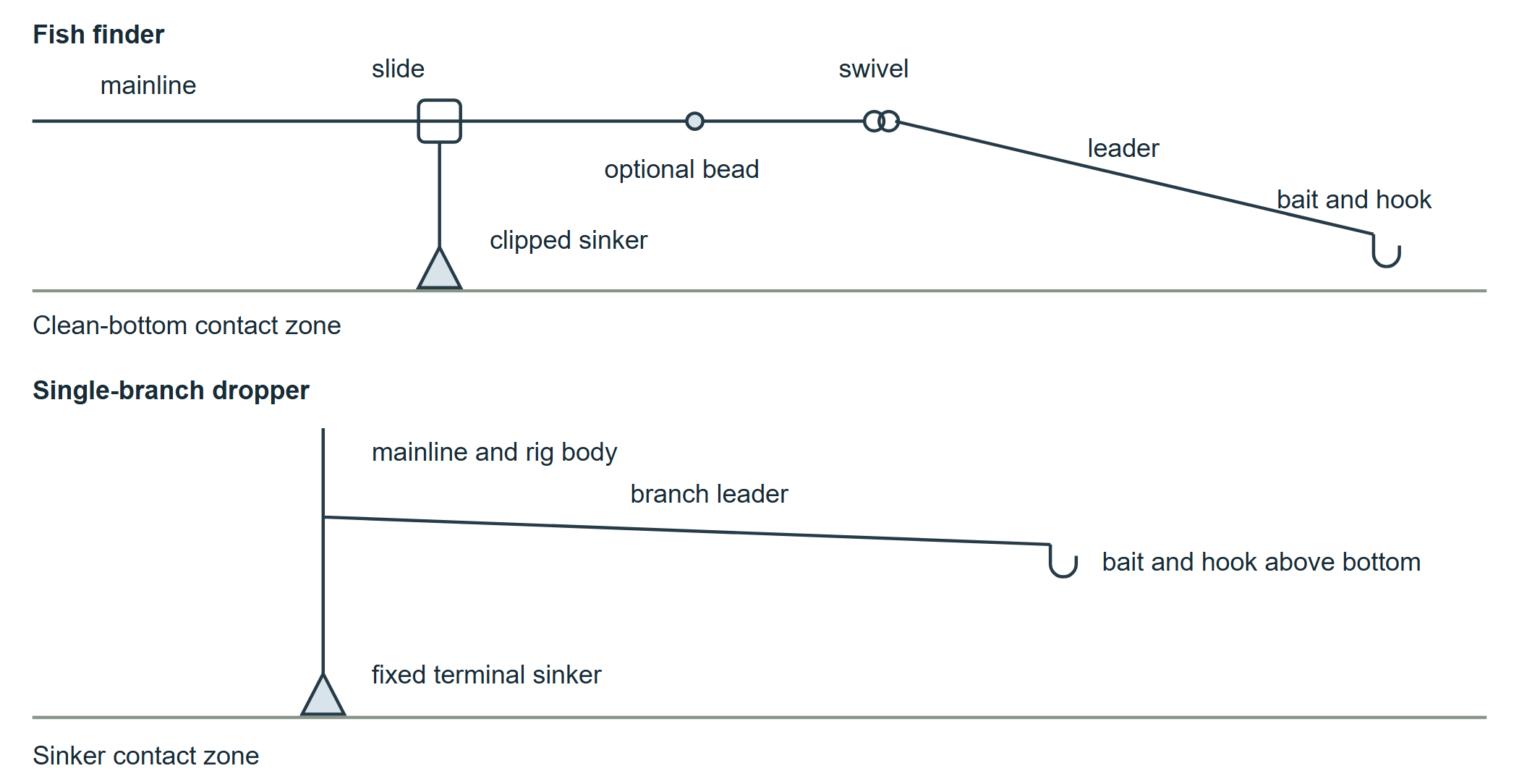
Start with the least sinker load that maintains control. For a cast, count the bait, sinker, and remaining rig together when checking the tackle’s casting range. Additional branches increase the number of hooks and must be allowed where you fish. New Jersey sliding and high-low rig patterns.
Respond to drift and snags before the next cast
If the sinker creeps across clean sand, retrieve and change one thing. Adjust the sinker load within the tackle’s limits, or change the casting angle so the rig follows a more controllable path. Watch what that single adjustment changes before making another.
If the rig catches repeatedly, stop feeding it into the same route. Move the casting or lowering position, shorten the path toward structure, or choose a presentation that keeps the bait above the obstruction. Beside a pier, preserve room to steer and land a fish throughout the drift.
Check local hook counts, hook requirements, and harvest rules before fishing. The Florida recreational saltwater rules apply to the species and waters they cover. Use the corresponding rules for your actual location. If bottom contact remains the wrong fit, return to the broader choice of saltwater fishing rigs and surf setup.
