⏱ Estimated reading time: 3 min read
Use a sliding bait rig over clean open bottom, a single-branch dropper for a controlled vertical drop from a permitted pier, and a float or a lure above the snags along a rough bank. Make the choice from your fishing stance, with a clear plan for retrieving the rig and landing a fish.
Let the shoreline determine the presentation
Open shoreline gives a cast and drifting line more room. A pier can offer a direct drop, but pilings restrict the route back. Rocks and snaggy banks may leave little room to steer a fish even when the bait itself stays clear. Inspect that landing route before choosing where to fish.
| Fishing stance | Starting presentation | Drift and line-angle tradeoff | Landing check |
|---|---|---|---|
| Open shoreline over clean bottom | One sliding bait rig | A cast gives reach, but current can sweep the leader away from the intended area | Keep a clear route from the bait’s position back to shore |
| Permitted pier | One branch above a fixed terminal weight, where allowed | A near-vertical line is easier to keep clear until current carries it toward pilings | Have suitable landing tackle and keep the fish’s route clear of the structure |
| Snag-prone bank or rocks | Suspended bait under a float, or a lure kept above the snags | The presentation can clear the bottom while its drift or retrieve still approaches an obstruction | Use the spot only when there is a safe landing path and room to steer |
Check site-specific fishing rules, spectator space, and protected habitats before setting up. Choose a presentation you can manage from the permitted position. FWC shore, pier, float, and bottom-fishing techniques.
Keep the hook and weight on the intended paths
On clean shoreline, pass the mainline through a sinker slide and tie it to a swivel, with an optional protective bead between them. Attach a leader and one hook beyond the swivel, then clip the weight to the slide. From a pier, place one hook branch above a fixed terminal sinker. Keep that drop clear of the pilings.
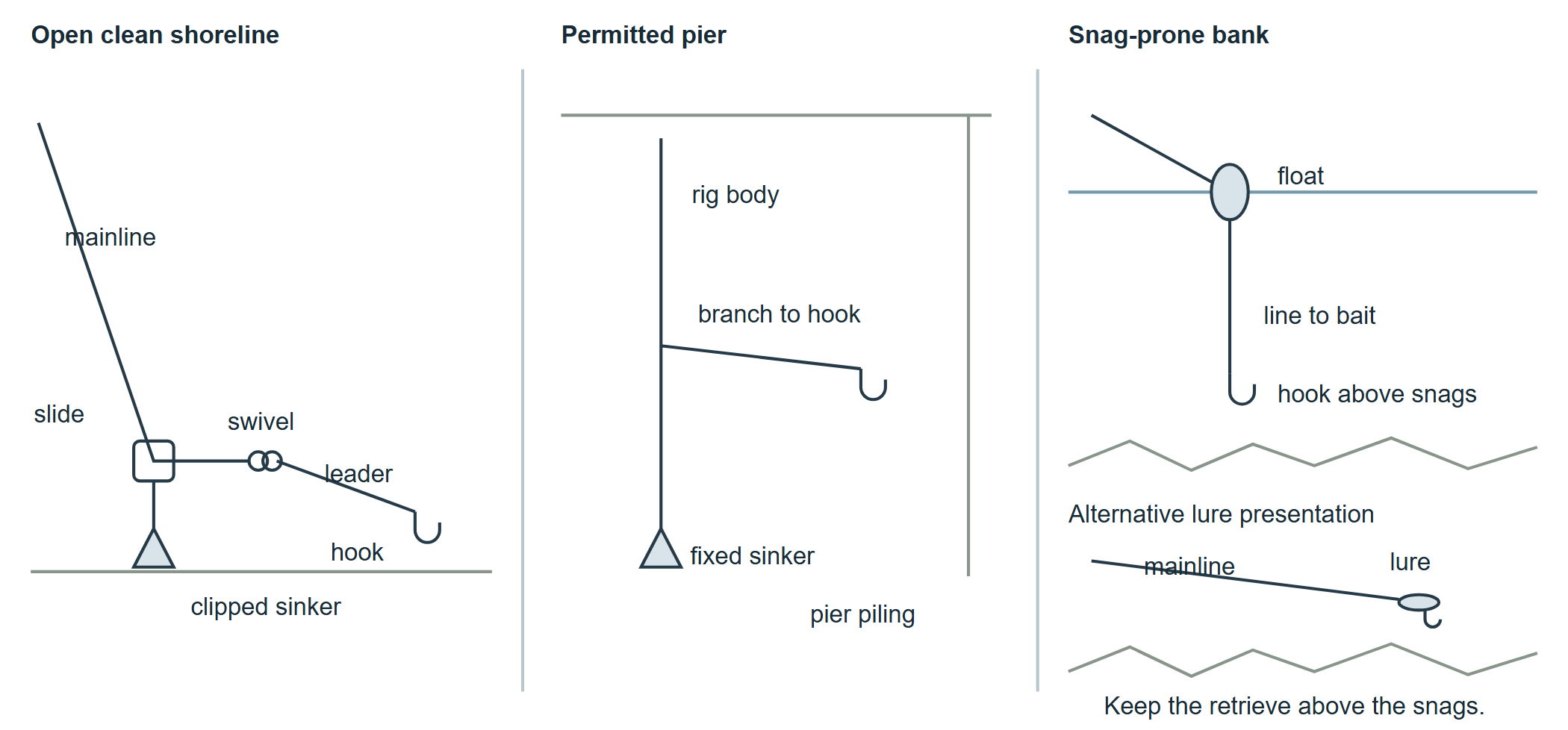
At a snaggy edge, set the float-to-hook spacing so the bait clears the rough ground throughout its drift. A castable lure is another option when you can keep its retrieve above the snags. In either case, preserve a clear route back to the landing position. The sliding and branch arrangements follow the patterns in the New Jersey rig guide.
Retrieve before drift removes your steering room
Watch the line angle as well as the bait’s starting position. Retrieve a pier rig before current takes it around a piling. Bring a float back before it enters a snagged edge or carries the bait beyond your landing corridor. Change the cast or retrieve path when a lure repeatedly approaches the same obstruction.
Keep spectators clear of hooks and moving tackle. Have the landing equipment your position requires before fishing, and respect protected habitat boundaries. If a fish could reach a place where you cannot safely steer or land it, choose another position.
For a different setting, return to the broader choice of saltwater fishing rigs and surf setup. Reconsider the bottom, line path, and landing room together before carrying the same rig to another shore.
